Symptoms and Diagnosis
Herpes or Pimple: How to Tell the Difference
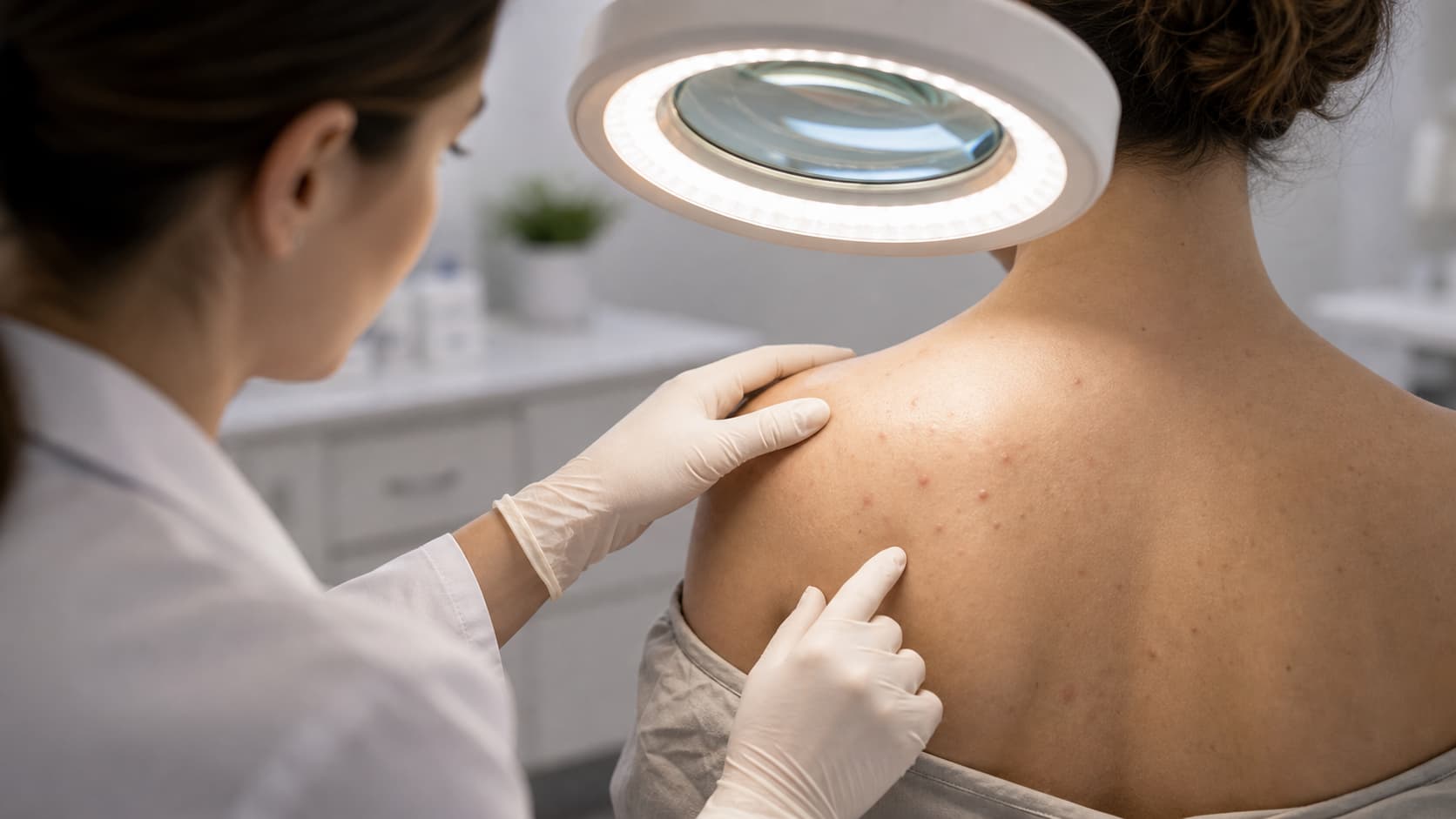
A herpes sore and a pimple can look nearly identical — but they differ in key ways that help distinguish them. The most reliable distinguishing features are location (herpes appears in consistent anatomical sites around the mouth, genitals, or buttocks), prodromal tingling before any visible lesion (herpes), the appearance of fluid-filled clustered blisters rather than a single pus-filled bump (herpes), and recurrence in the same location (strongly suggests herpes).
Side-by-Side Comparison
Feature | Herpes sore | Pimple (acne) |
|---|---|---|
Location | Genitals, buttocks, inner thighs, lips, perianal area | Face, back, chest, shoulders (sebaceous-rich areas) |
Appearance | Cluster of small fluid-filled blisters on red base | Single whitehead, blackhead, or pus-filled bump |
Contents | Clear or slightly cloudy serous fluid | Thick white or yellow pus |
Prodrome | Tingling, itching, burning 1–2 days before lesion | None — pimple appears without warning |
Pain character | Burning, painful, especially when ulcerated | Tender if cystic, otherwise mild |
Progression | Blisters → rupture → ulcer → crust → heal | Forms head, may pop, heals |
Recurrence | Same location, same prodrome each time | New spots, variable locations |
Healing time | 1–3 weeks (first outbreak); 3–7 days (recurrence) | Days to 1–2 weeks |
The Most Useful Clinical Clues
Recurrence in exactly the same spot: this is the strongest practical indicator of herpes. Acne doesn't reliably recur in identical locations. Herpes almost always reactivates at the same site because the virus is latent in the same nerve ganglia each time. Prodrome: if the bump was preceded by tingling, itching, or burning in that area before it appeared, that's herpes. Pimples have no prodromal phase. Contents: squeezing a herpes blister produces watery fluid, not thick pus. (Avoid squeezing either — spreading herpes to other areas or fingers is possible.) Location: a bump on the scrotum, labia, buttocks, or perineal area is more likely to be herpes than acne, which is unusual in those anatomical locations.
When to Get Tested
If you have an active lesion that could be herpes: PCR swab from the lesion immediately. This is far more accurate than a blood test for active infection and confirms or excludes herpes definitively. Don't wait for it to heal before testing — the window for accurate PCR is while the lesion is active. If no active lesion but ongoing concern: type-specific IgG blood test at 12 to 16 weeks after potential exposure. IgG takes time to develop — testing too early produces false negatives.
For herpes PCR and type-specific IgG testing, Health Test Express offers panels with results in 1 to 2 days.
Frequently Asked Questions
Can you pop a herpes sore like a pimple?
No — and don't try. Herpes blisters contain virus-laden fluid. Popping them spreads the virus to surrounding skin (autoinoculation) and to anything your fingers touch afterward. The blister will break on its own, forming an ulcer that heals.
Does herpes always look like blisters?
No. Herpes outbreaks can appear as single small ulcers, redness, or minor irritation that looks nothing like the classic blister cluster. Mild outbreaks are frequently mistaken for pimples, razor burn, or contact irritation.
My dermatologist said it's acne but it keeps coming back in the same spot. Could it be herpes?
Yes. Recurrent lesions in an identical location are a clinical red flag for herpes regardless of what the individual lesion looks like. Request a PCR swab during an active episode, or an IgG blood test to check herpes serostatus.
Related: Acne vs herpes · Ingrown hair or herpes? · Herpes window period · Get tested today
This article is for informational purposes only and does not constitute medical advice.
Not Sure? Take the Herpes or Pimple Quiz
If you are still unsure whether what you are seeing is herpes or a pimple, take our free 2-minute symptom assessment below. Answer 7 quick questions about your symptoms - location, appearance, pain level, and history - and get an instant recommendation on whether testing is the right next step. The quiz is anonymous, requires no signup, and is based on the clinical distinctions outlined in this article.
Herpes or Pimple?
Answer 7 quick questions about what you're seeing. This quiz helps you understand what the bump might be — it does not replace a medical diagnosis.
Question 1 of 7
Where exactly is the bump or cluster?
This quiz is for educational purposes only and is not a medical diagnosis. Only a laboratory test can confirm or rule out herpes. When in doubt, get tested.
Don’t Know What Could Be Causing Your Symptoms?
Get the complete STD test panel and take control of your health!


Dr. Michael Thompson is an expert in sexually transmitted diseases with extensive clinical and research experience. He leads campaigns advocating for early diagnosis and prevention of diseases like HIV and gonorrhea. He collaborates with local organizations to educate both youth and adults about sexual health.