Symptoms and Diagnosis
Herpes Window Period: How Long After Exposure Should You Get Tested?
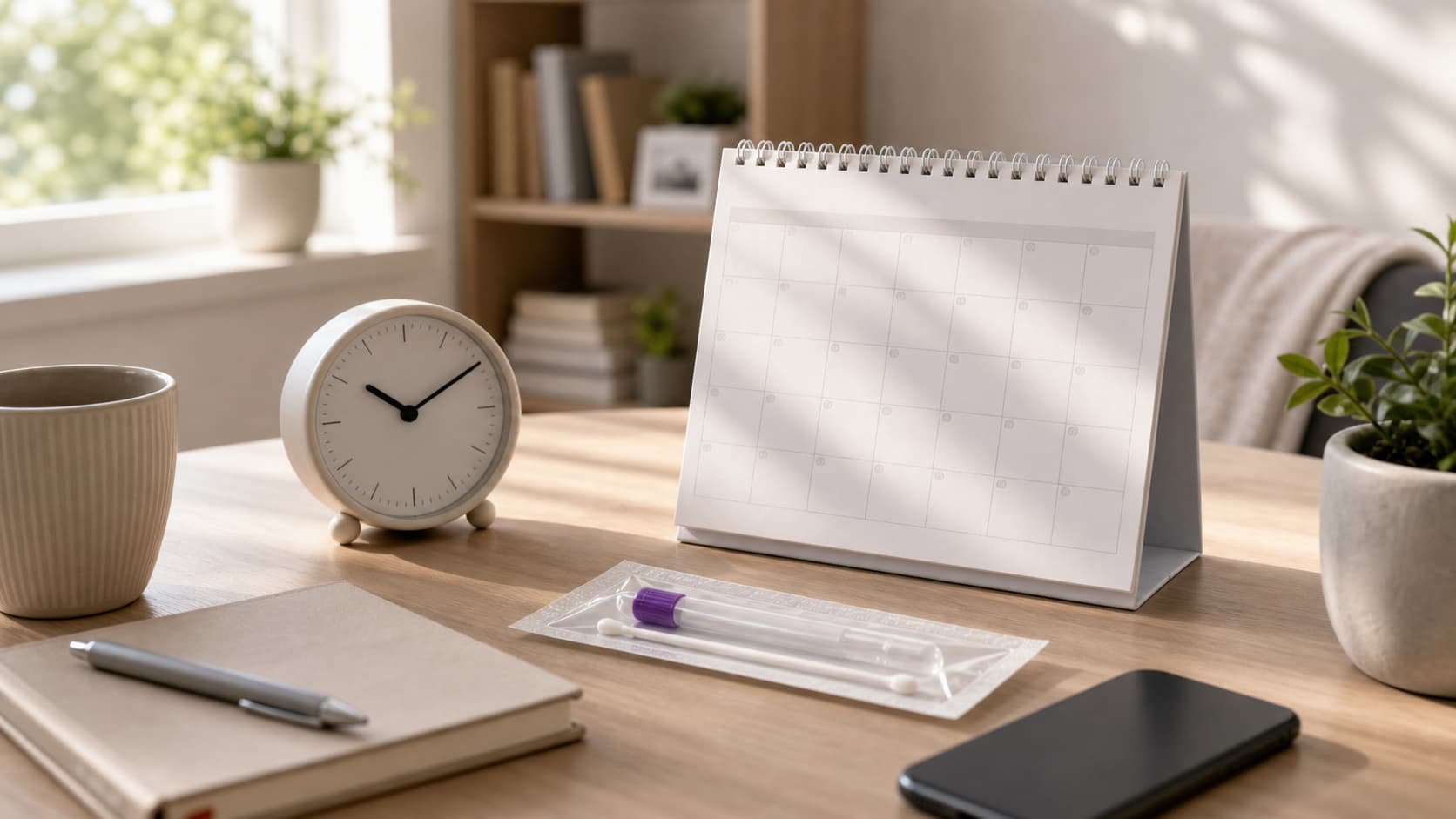
The herpes window period is the most misunderstood testing timeline in sexual health — because herpes has two completely different window periods depending on which test you use. A PCR swab from an active sore has zero window period — it's accurate the moment a lesion is present; a blood IgG antibody test requires 6 to 16 weeks after exposure to reliably detect infection; and approximately 87% of HSV-2 infected people never have a recognized outbreak, making the blood test the only practical way most people can know their status.
Two Tests, Two Completely Different Windows
PCR swab (from an active lesion): detects HSV DNA directly from a blister or ulcer. Accuracy: essentially 100% when swabbed from an active lesion in the blister or early ulcer phase. Window period: zero. If you have an active sore, swab it now. Waiting makes the test less accurate, not more — the lesion produces the most detectable DNA while it's actively blistering. Don't wait for a herpes swab test.
IgG blood test (type-specific serology): detects IgG antibodies your immune system produces against HSV-1 or HSV-2. This test checks your immune status — whether you've ever been infected — rather than detecting the virus directly. Window period: 6 weeks minimum for initial antibody detection in most people; 12 to 16 weeks for a result reliable enough to rule out infection. Testing at 6 weeks is a preliminary result; a definitive negative requires 16 weeks.
Why the IgG Window Is 16 Weeks
After primary HSV-2 infection, the immune system first mounts an IgM response (within days to a week) and then transitions to a sustained IgG response. HSV-2 IgG takes longer to reach detectable levels than IgM. Type-specific IgG tests (which distinguish HSV-1 from HSV-2 — important for clinical interpretation) detect HSV-2 IgG at varying thresholds across commercial platforms. Some individuals seroconvert (develop detectable IgG) by 6 weeks; others take up to 16 weeks. This biological variability is why a 16-week negative is required for a definitive ruling-out of infection.
IgM tests are not reliable for diagnosing recent HSV infection. They cross-react between HSV-1 and HSV-2, can be positive during recurrences as well as primary infection, and have unacceptable false positive and false negative rates. Type-specific IgG is the only serological test worth using for herpes.
Practical Testing Decision Guide
Active sore or blister right now: PCR swab immediately. Don't wait, don't apply cream first. Known exposure, no sores, 6 to 12 weeks ago: IgG test now as a preliminary; schedule a confirmatory test at 16 weeks if negative. Known exposure, no sores, under 6 weeks ago: too early for reliable IgG. Watch for symptoms; if any lesion appears, swab it immediately. No specific exposure, want to know overall herpes status: IgG test now. A positive IgG is definitive regardless of when you test — the window period only matters for interpreting a negative.
After a Positive IgG: What It Means
A positive type-specific HSV-2 IgG confirms past infection. It tells you: you have genital herpes; you shed the virus asymptomatically on approximately 15 to 20% of days; your partners are at risk unless you use suppressive therapy and/or condoms. A positive HSV-1 IgG is more complex — most adults have HSV-1 from oral childhood exposure; it doesn't automatically mean genital infection. Ask your provider to interpret your specific result in clinical context.
For type-specific herpes IgG testing with results in 1 to 2 days, Health Test Express offers HSV-1 and HSV-2 panels without a GP referral.
Frequently Asked Questions
Can herpes be detected in 2 weeks?
By PCR swab from an active lesion: yes, immediately. By IgG blood test: sometimes, but not reliably. Most labs report IgG as reactive at 6 to 12 weeks, not 2 weeks. A negative IgG at 2 weeks has no clinical meaning.
Does a negative herpes test at 3 months rule it out?
At 12 weeks (3 months), most HSV-2 infections are detectable by IgG. A negative at 12 weeks from a specific exposure is reassuring in most cases. A definitive negative requires 16 weeks. If the 12-week test is negative and you remain concerned, retest at 16 weeks.
If I have no symptoms, does that mean I don't have herpes?
No. Approximately 87% of HSV-2 positive people never have recognized outbreaks. The only way to determine herpes status in the absence of symptoms is a blood IgG test.
Related: How long does herpes take to show up? · CDC herpes testing guidelines · Herpes symptoms HSV-2 · Get tested today
This article is for informational purposes only and does not constitute medical advice.
When Should You Get Tested?
Testing too early can give a false negative. Answer 4 questions and we'll tell you when each test becomes accurate.
Question 1 of 4
What type of exposure are you concerned about?
This tool provides general guidance based on CDC-recommended window periods. It is not medical advice. Consult a healthcare provider for personalized recommendations. If you're within 72 hours of HIV exposure, ask about PEP immediately.
Don’t Know What Could Be Causing Your Symptoms?
Get the complete STD test panel and take control of your health!


Dr. Michael Thompson is an expert in sexually transmitted diseases with extensive clinical and research experience. He leads campaigns advocating for early diagnosis and prevention of diseases like HIV and gonorrhea. He collaborates with local organizations to educate both youth and adults about sexual health.