Symptoms and Diagnosis
How to Test for Gonorrhea: Methods, Timing, and What to Expect
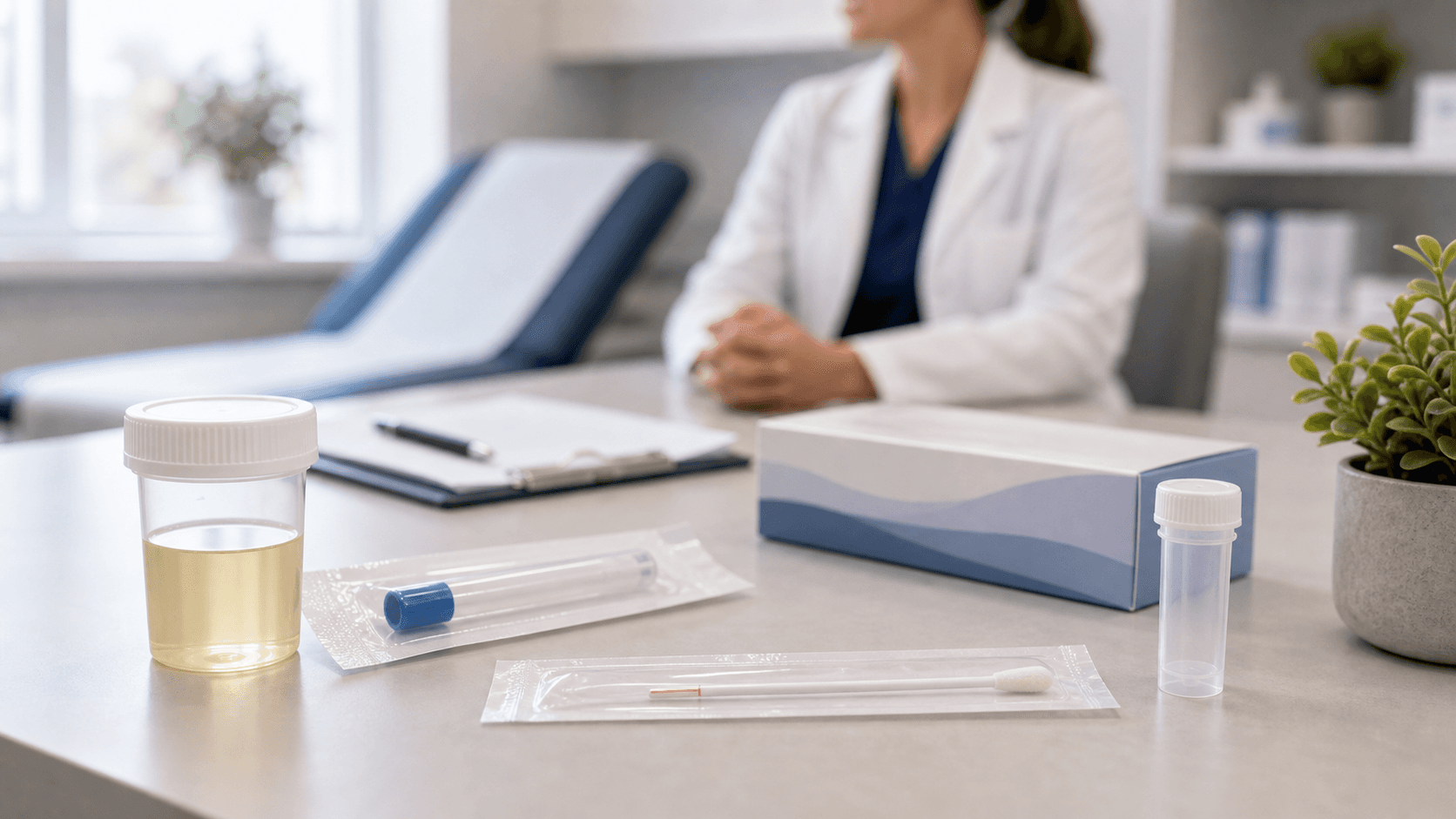
Gonorrhea testing is more site-specific than most people realize — and choosing the wrong test or the wrong site means the infection will be missed entirely. NAAT (nucleic acid amplification test) is the standard for gonorrhea detection and is done via urine, vaginal swab, or site-specific throat and rectal swabs; a culture with antimicrobial susceptibility testing is needed when treatment failure or antibiotic resistance is suspected.
NAAT: The Standard Test
NAAT identifies Neisseria gonorrhoeae DNA directly in the sample, making it the most sensitive test available — more sensitive than culture and more specific than older gram-stain microscopy. NAAT is used for all routine gonorrhea testing. A negative NAAT result is highly reliable when the test is done at the right site at the right time (at least 1 to 2 weeks after exposure for reliable detection).
NAAT cannot tell you which antibiotics the bacteria is resistant to — it only confirms infection is present. For antibiotic susceptibility information, a culture is needed.
Site-Specific Testing: The Most Commonly Missed Point
This is where most standard gonorrhea articles fail readers. Gonorrhea infects different anatomical sites independently. A urine test detects urethral infection in men and can detect vaginal/cervical infection in women. It does not detect rectal or throat infection. Each additional site that was exposed during sexual activity requires its own separate swab.
Site | Test type | When to order |
|---|---|---|
Urethra (men) / cervix-vagina (women) | Urine NAAT or vaginal swab | All routine gonorrhea testing |
Rectum | Rectal swab NAAT | Any receptive anal sex |
Pharynx (throat) | Throat swab NAAT | Any oral sex (giving or receiving) |
Rectal and pharyngeal gonorrhea are almost always asymptomatic. Without a specific swab, they are entirely missed. Studies at sexual health clinics consistently show a significant proportion of positive gonorrhea results come from rectal or throat sites in patients whose urine test was negative. If you've had oral or anal sex, tell your provider specifically so the appropriate swabs are ordered.
Practical Testing Tips
Before a urine test: don't urinate for at least 1 hour before providing the sample — ideally use first morning urine, or have not urinated for at least 1 hour. Urinating immediately before the test dilutes the bacterial concentration and can produce a false negative. Self-collected vaginal swabs are as accurate as clinician-collected swabs for NAAT and can be done at home or at the clinic. Throat and rectal swabs: brief, slightly uncomfortable, not painful. They take seconds and can be self-collected at some clinics with instructions.
Window Period: When to Test
Gonorrhea has a shorter window period than most STDs. NAAT becomes positive approximately 1 to 2 weeks after exposure. Testing immediately after a high-risk encounter (same day or next day) will almost always produce a false negative regardless of whether infection occurred. Wait at least 7 days, ideally 14 days, for a reliable result from a specific exposure. If you test at 7 days and get a negative result but remain concerned, repeat at 14 days.
Culture: When It's Needed
Gonorrhea culture — growing the bacteria in a laboratory — allows antimicrobial susceptibility testing (identifying which antibiotics the specific strain is resistant to). Culture is indicated when: symptoms persist or return after ceftriaxone treatment (possible treatment failure from ceftriaxone resistance); a test of cure is strongly indicated (especially for pharyngeal gonorrhea, where treatment failure is more common); the infection is in a healthcare setting where resistance surveillance is conducted. Culture requires a clinical swab (not urine) and is less available than NAAT, but is essential for suspected resistance cases.
Test of Cure: Recommended for Pharyngeal Gonorrhea
Unlike chlamydia, test of cure after gonorrhea treatment is now recommended for pharyngeal infection and considered for any case where treatment failure is a concern. Repeat NAAT 1 to 2 weeks after ceftriaxone injection. Pharyngeal gonorrhea is harder to eradicate than genital infection — the throat environment creates conditions where treatment failure is documented more frequently.
For fast comprehensive gonorrhea testing with results in 1 to 2 days, Health Test Express offers NAAT panels including urogenital testing without a GP referral.
Frequently Asked Questions
Can I test for gonorrhea at home?
Yes, for urogenital infection. At-home urine tests or vaginal self-swab kits from services like Everlywell or LetsGetChecked use NAAT and are accurate for genital sites. They cannot test for rectal or throat gonorrhea. If you've had oral or anal sex, you need a clinical swab at those sites.
Can gonorrhea be detected in a urine test?
Yes, for urethral infection in men and vaginal/cervical infection in women. It cannot be detected in urine for throat or rectal infection — separate site-specific swabs are required for those sites.
How accurate is a gonorrhea NAAT test?
NAAT has sensitivity above 95% and specificity above 99% for gonorrhea at genital sites. Sensitivity at rectal and throat sites is slightly lower but still the most accurate test available for those sites.
Related: Gonorrhea symptoms · Gonorrhea treatment · Gonorrhea window period · Get tested today
This article is for informational purposes only and does not constitute medical advice.
Don’t Know What Could Be Causing Your Symptoms?
Get the complete STD test panel and take control of your health!


Dr. Michael Thompson is an expert in sexually transmitted diseases with extensive clinical and research experience. He leads campaigns advocating for early diagnosis and prevention of diseases like HIV and gonorrhea. He collaborates with local organizations to educate both youth and adults about sexual health.