Symptoms and Diagnosis
Herpes on the Tongue: Symptoms and Treatment
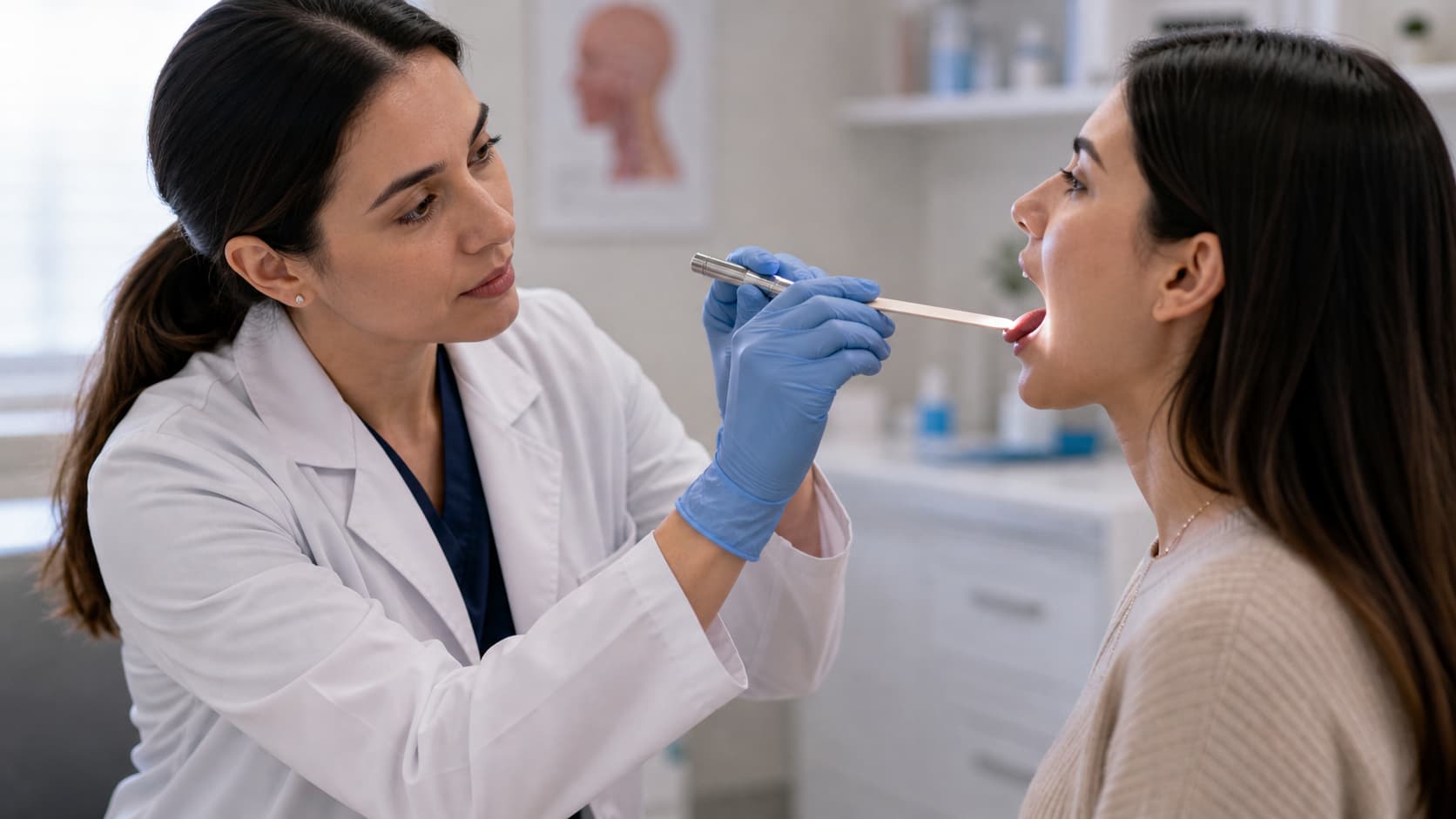
Herpes on the tongue and inside the mouth is usually caused by HSV-1, though HSV-2 can also infect oral mucosa in some cases. Oral herpes causes painful ulcers on or under the tongue, on the inner cheeks, gums, and palate; primary oral HSV-1 in adults produces a more severe first outbreak than childhood acquisition; and oral herpes on the tongue must be distinguished from aphthous ulcers (canker sores), which are not caused by herpes and are not infectious.
Where Oral Herpes Appears
HSV-1 most commonly infects the lips (labial herpes — cold sores). When it infects the oral mucosa internally, it can appear on: the tongue (dorsal surface, lateral borders, or undersurface); the inner cheeks (buccal mucosa); the gums (gingiva), causing herpetic gingivostomatitis in primary infection; the palate; and the throat (herpes pharyngitis).
Location matters clinically because it affects how the infection presents and how easily it's mistaken for other conditions.
Primary Oral HSV-1 vs Recurrences
Primary oral HSV-1 infection in adults — first-time infection without prior immunity — causes herpetic gingivostomatitis: a severe, painful inflammation of the gums and oral mucosa with multiple ulcers throughout the mouth, high fever (39-40°C), difficulty eating and swallowing, swollen lymph nodes, and malaise lasting 1 to 2 weeks. This severe presentation is more common in children but occurs in adults acquiring HSV-1 for the first time without prior partial immunity.
Recurrent oral herpes (in someone already infected) is typically localized to the lips (cold sores) or a single small cluster of intraoral ulcers. Recurrences are shorter (5 to 10 days), less severe, and often preceded by prodromal tingling or burning. Intraoral recurrent herpes almost always appears on keratinized mucosa (hard palate, gums, dorsal tongue) rather than the softer non-keratinized mucosa (inner cheeks, soft palate) — this anatomical distribution is helpful in distinguishing it from aphthous ulcers.
Herpes on the Tongue vs Canker Sores
This is the most common clinical confusion. Both cause painful ulcers in the mouth. Key distinguishing features:
Feature | Herpes (HSV-1) | Aphthous ulcer (canker sore) |
|---|---|---|
Location | Keratinized mucosa (gums, hard palate, dorsal tongue) | Non-keratinized mucosa (inner cheeks, soft palate, lateral tongue) |
Appearance | Cluster of small vesicles that rupture to form ulcers | Single round ulcer with grey-white centre and red halo |
Infectious? | Yes | No |
Prodrome | Tingling, burning before sores appear | None typically |
Fever | In primary infection | No |
Treatment
Primary herpetic gingivostomatitis: oral valacyclovir 1g twice daily or acyclovir 400mg five times daily for 7 to 10 days. Symptomatic relief: chlorhexidine mouthwash, topical anaesthetic gel (lidocaine), adequate hydration. Hospitalization may be needed for severe cases with dehydration. Recurrent intraoral herpes: valacyclovir 500mg twice daily for 3 days, started at the first prodromal symptom. Starting during prodrome (before any visible ulcer) is significantly more effective than starting after ulcers appear.
For herpes testing including type-specific IgG, Health Test Express offers panels with results in 1 to 2 days.
Frequently Asked Questions
Can you get herpes on your tongue from oral sex?
Yes. HSV-2 can infect oral mucosa including the tongue through oral sex, though this is less common than HSV-1 oral infection. HSV-2 oral infections tend not to recur as frequently as HSV-2 genital infections because the oral mucosa is not the virus's preferred anatomical location.
Is a sore on my tongue herpes or a canker sore?
If it's on the inner cheek, soft palate, or lateral tongue as a single round grey-white ulcer — probably a canker sore (not herpes, not infectious). If it's on the gums, hard palate, or dorsal tongue as a cluster of small vesicles preceded by tingling — more likely herpes. Only a PCR swab of an active lesion or IgG blood test confirms herpes.
Can herpes on the tongue spread to partners?
Yes. Active herpes lesions in the mouth are infectious and can transmit HSV-1 through kissing or oral sex. Avoid kissing and oral sex until lesions are fully healed.
Related: How do you get herpes? · Can STDs be transmitted through kissing? · Herpes window period · Get tested today
This article is for informational purposes only and does not constitute medical advice.
Don’t Know What Could Be Causing Your Symptoms?
Get the complete STD test panel and take control of your health!


Dr. Michael Thompson is an expert in sexually transmitted diseases with extensive clinical and research experience. He leads campaigns advocating for early diagnosis and prevention of diseases like HIV and gonorrhea. He collaborates with local organizations to educate both youth and adults about sexual health.