Symptoms and Diagnosis
False Negative STD Test: Why It Happens and What to Do
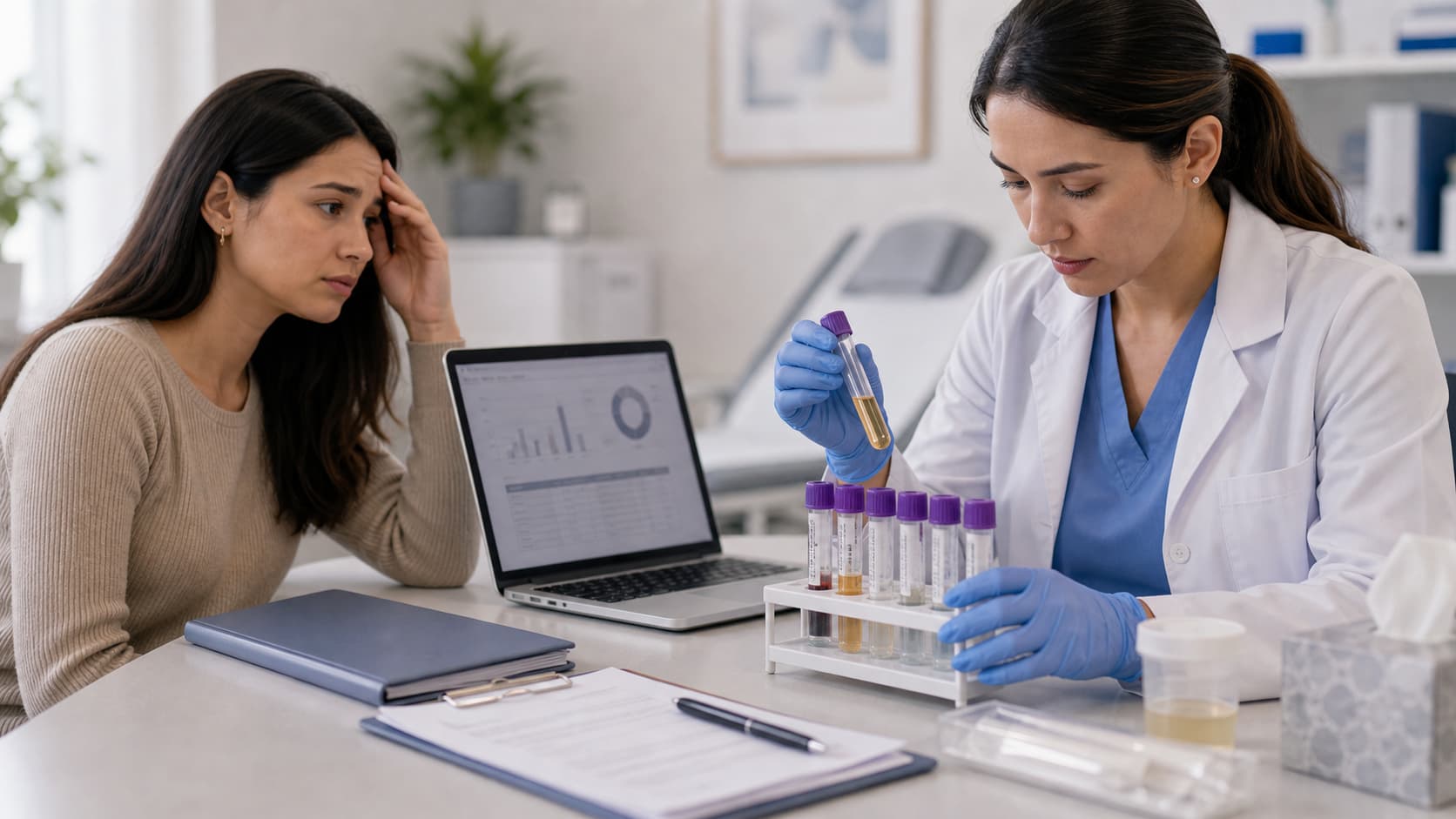
A false negative STD test result — where the test says negative but the infection is actually present — has three distinct causes, each with a different solution. The most common cause is testing too early within the window period, before sufficient bacterial or viral load is detectable; the second is testing the wrong anatomical site (urine tests miss rectal and pharyngeal infections); and the third is specimen quality issues including urinating before a urine test, inadequate swab technique, or sample transport problems.
Cause 1: Testing Within the Window Period
Every STD test has a window period — the time from exposure until the test can reliably detect the infection. Testing before this window closes produces a false negative even with genuine infection, because there isn't enough bacterial DNA (for NAAT) or antibodies (for serological tests) to detect yet. Window periods by infection: chlamydia NAAT: 14 days; gonorrhea NAAT: 14 days (may be positive as early as 5 to 7 days); syphilis serology (RPR/VDRL): 21 to 90 days depending on stage; herpes PCR from lesion: zero window (positive immediately if sore is present); herpes IgG blood test: 6 to 16 weeks; HIV 4th gen Ag/Ab: 18 to 45 days; HIV RNA/NAT: 10 to 33 days. Testing at day 5 after potential chlamydia exposure and getting a negative is expected and meaningless. The solution: wait until the appropriate window has passed before testing, or retest after the window if early testing was negative.
Cause 2: Testing the Wrong Site
This is the most preventable cause of clinically significant false negatives. A urine NAAT accurately tests the urethra (men) or vagina/cervix (women). It tells you nothing about the rectum or the pharynx. Rectal chlamydia, rectal gonorrhea, pharyngeal chlamydia, and pharyngeal gonorrhea all require separate site-specific swabs. They are missed entirely by urine or vaginal swabs. People who receive rectal and oral sex and test only with urine will get negative results that miss significant infections. Tell your provider specifically what sexual activities you've had so they can order the appropriate site-specific tests.
Cause 3: Specimen Quality Issues
Even with the right test at the right time, certain factors reduce sensitivity. Urinating before a urine chlamydia/gonorrhea test: flushes bacteria from the urethra. Always wait at least 1 hour (ideally 2 hours) before providing a urine sample. Lubricant on a swab: certain lubricants contain compounds that inhibit PCR amplification. If a provider uses lubricant during examination before collecting a swab, it can interfere with NAAT results. Antibiotics in the recent past: partial antibiotic courses taken for an unrelated condition can suppress bacterial load below detection thresholds without clearing the infection. Tell your provider about any recent antibiotic use. Sample transport: specimens must be stored and transported at appropriate temperatures. Delayed or improperly stored samples can degrade bacterial DNA. This is rare at accredited labs but is a documented source of false negatives.
What to Do After a Suspected False Negative
If you test negative but symptoms develop, or if a partner tests positive after your negative test: retest immediately. If negative due to window period timing: retest at the appropriate interval. If single-site tested but at-risk for multi-site infection: request comprehensive site-specific testing at your next visit. If you took antibiotics before testing: tell your provider — the test result may be unreliable.
For reliable multi-site STD testing with results in 1 to 2 days, Health Test Express offers NAAT panels without a GP referral.
Frequently Asked Questions
How common are false negative STD tests?
False negatives from testing too early (within window period) are very common — testing at day 3 for chlamydia will produce a false negative in most genuine infections. False negatives from NAAT technical failures are uncommon — NAAT has over 95% sensitivity at the right site and right time.
Can a false negative STD test be caused by antibiotics?
Yes. Partial antibiotic courses (from prescriptions for other conditions) can suppress bacterial STD load below detection thresholds. Always inform your provider of recent antibiotic use when interpreting a negative result.
Can STD tests give wrong results at home?
At-home NAAT tests (urine self-collection sent to a lab) are as accurate as clinic tests when collected correctly — the same window period rules and urination timing instructions apply. At-home tests only cover urogenital sites; they can't test rectum or throat.
Related: False positive chlamydia test · Chlamydia window period · STD window period guide · Get tested today
This article is for informational purposes only and does not constitute medical advice.
Don’t Know What Could Be Causing Your Symptoms?
Get the complete STD test panel and take control of your health!


Dr. Michael Thompson is an expert in sexually transmitted diseases with extensive clinical and research experience. He leads campaigns advocating for early diagnosis and prevention of diseases like HIV and gonorrhea. He collaborates with local organizations to educate both youth and adults about sexual health.