Prevention and Education
What Happens at an STD Test Appointment?
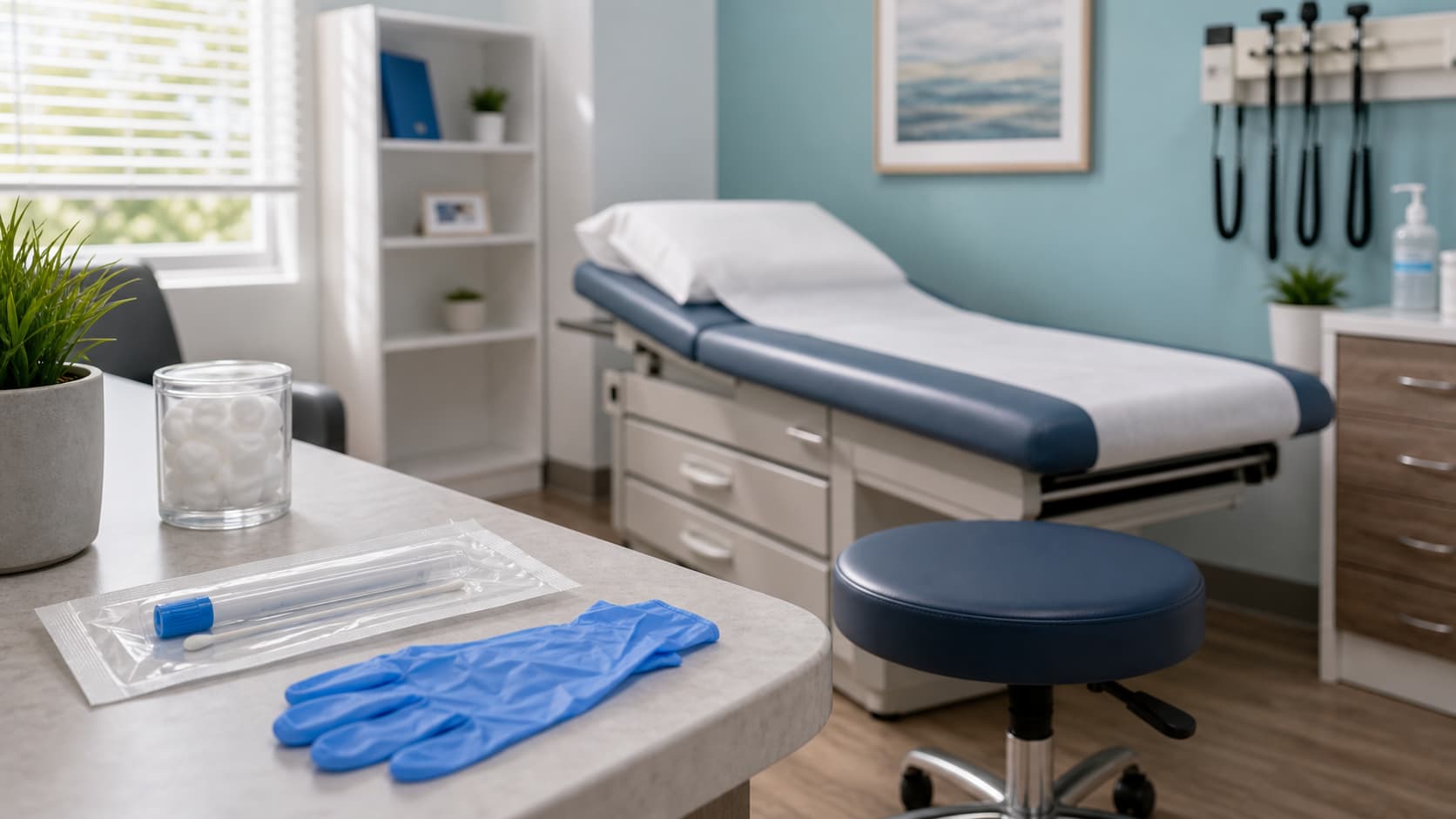
Most people don't know what to expect at an STD test appointment — and that uncertainty is one of the most common reasons people delay getting tested. A standard STD testing appointment at a private lab or sexual health clinic takes 15 to 30 minutes, involves a brief health history interview, a urine sample, and a blood draw; no physical examination is required for routine screening; and results return in 1 to 3 business days via a secure online portal.
Before You Arrive: The One Thing That Matters Most
The single most important preparation step for an STD test appointment is one almost no one mentions in advance: do not urinate for at least 1 hour before your appointment if you're providing a urine sample. Ideally, go 2 hours without urinating.
The reason: chlamydia and gonorrhea NAAT testing uses first-catch urine — the first 20 to 30 milliliters of your urine stream, which captures the highest concentration of bacteria that has accumulated in the urethra. If you've recently urinated, the urethra is essentially flushed clean, and bacterial concentration drops sharply. Testing too soon after urinating is one of the most common causes of false negative results at otherwise-excellent labs. I've seen patients get a negative result that later turned out to be a false negative from exactly this mistake.
Other preparation: no specific fasting is required. For blood-based tests (HIV, syphilis, herpes, hepatitis), eating beforehand doesn't affect results. You don't need to avoid sex before testing, though some providers recommend 24 to 48 hours abstinence before urine collection to avoid dilution from intercourse-related fluids.
What Happens When You Check In
At a private direct-access lab (Labcorp, Quest, Health Test Express): you check in with a requisition number from your online order. No explanation needed, no discussion about why you're there. The front desk receives your order details, verifies your identity, and directs you to wait. At a sexual health clinic or Planned Parenthood: intake involves a brief paper or digital form asking about your reason for the visit, insurance information (if applicable), and basic health history. Expect to answer a few questions about your sexual history during the intake or with a nurse/provider — these questions exist to ensure you receive the right tests, not to judge you.
The Health History Interview: What You'll Be Asked
At a dedicated sexual health clinic, a provider or nurse will ask you several targeted questions before ordering tests. These typically include: what types of sexual contact have you had in the last 3 months (vaginal, anal, oral)? Have you had any symptoms (discharge, sores, burning, rash)? When was your last potential exposure? Have you been tested before, and when? Are you pregnant or trying to conceive?
The most important question here is the one about sexual contact type. This determines which tests are ordered. A urine test only covers urethral/cervical infections. If you've had receptive anal sex, a rectal swab must be specifically ordered. If you've had oral sex, a throat swab must be specifically ordered. These swabs are not included in standard panels unless you disclose. My strong advice: be specific and complete in this interview. The goal is getting every relevant site tested, not minimizing what you tell the provider. There is no judgment — the information is used entirely to order the right tests.
Specimen Collection: What to Expect
The collection process is quick. At a private lab, it typically takes less than 15 minutes from checking in to walking out. Urine collection: you're given a specimen cup and directed to a restroom. Provide the first 20 to 30mL of your urine stream (don't start partway through — this is first-catch, not midstream). The cup may have a fill line. Seal it and leave it on the designated shelf or hand it to staff. Blood draw: a phlebotomist draws 1 to 3 vials of blood from a forearm vein. This tests for HIV (4th generation Ag/Ab), syphilis (RPR), herpes IgG (if ordered), hepatitis B and C. The draw takes under 2 minutes. Mild bruising at the site is common. Swabs (if applicable): rectal swabs and throat swabs are brief and uncomfortable but not painful. Self-collection is available at some clinics with provider instructions. At others, a nurse or provider collects them. Each swab takes approximately 5 to 10 seconds. Rapid HIV test: if ordered, a finger-prick blood sample is collected on-site and results are available in 20 minutes while you wait. For symptomatic genital sores: a provider may use a cotton-tipped swab to collect material directly from an active lesion for PCR testing. This is how active herpes is definitively diagnosed — don't wait for the lesion to heal before testing, as that reduces accuracy.
Results: When and How You'll Hear
At a private direct-access lab: results are delivered to your secure online account. NAAT results for chlamydia and gonorrhea: typically 1 to 2 business days. Blood tests (HIV, syphilis, herpes IgG, hepatitis): 1 to 3 business days. The portal allows you to view results at any time — you won't need to call and wait on hold. Some services send an email or text notification when results are ready; check which notification method your specific provider uses. At a sexual health clinic or Planned Parenthood: results are typically communicated by phone or through their patient portal. NAAT results may take 2 to 5 days at some locations. Rapid HIV results: available in 20 minutes on-site. Positive results: most services provide a physician consultation by phone to explain the result, discuss next steps, and facilitate treatment access. At dedicated STD clinics, treatment is often available immediately on-site for gonorrhea (ceftriaxone injection) and by prescription for chlamydia and syphilis.
Privacy: What Appears on Your Records
At a private self-pay lab (paying out of pocket without billing insurance): the test and result exist only in your lab account and the provider's secure system. It doesn't appear in insurance records, your employer's health plan, or your primary care record unless you choose to share it. At an insurance-billed provider: the test and ICD-10 diagnosis code appear in your Explanation of Benefits (EOB), which your insurance company processes. Employers with self-insured health plans may have access to aggregate claims data, though individual diagnoses should be protected by HIPAA. Anonymous HIV testing at public health clinics: results are linked only to a code number, with no name or ID associated.
When to Seek Urgent Evaluation Instead of a Routine Appointment
Don't schedule a routine appointment if: you have severe pelvic pain with fever (possible PID — go to urgent care or ER today); you have a high fever alongside any STD symptom (possible DGI or complicated PID); you had a very high-risk HIV exposure within the last 72 hours (PEP must start within 72 hours — go to an ER or PEP clinic today, not a regular testing center); you have signs of a severe allergic reaction to a previously administered antibiotic.
For fast private STD testing with results in 1 to 2 days and no appointment needed, Health Test Express offers no-appointment panels at lab locations nationwide.
Frequently Asked Questions
Do I need to make an appointment for STD testing?
At private direct-access labs (Labcorp, Quest, Health Test Express), walk-in visits are accepted without an appointment at most locations — though scheduling reduces wait time. At sexual health clinics and Planned Parenthood, appointments are often required or strongly recommended to minimize wait. Call ahead or check online to confirm walk-in availability.
Will a doctor examine me physically during an STD test?
Not for routine screening. Standard STD testing at private labs requires no physical examination — only urine and blood specimens. At a sexual health clinic, a physical exam is performed if you have symptoms (discharge, sores, rash) that need to be assessed. Routine screening without symptoms doesn't require an exam.
How long is an STD test appointment?
At a private lab: 10 to 20 minutes from check-in to specimen collection complete. At a sexual health clinic with a health history interview: 20 to 45 minutes depending on complexity. Rapid HIV testing adds 20 minutes to any appointment for the on-site result.
What should I bring to an STD test appointment?
Photo ID. Health insurance card if billing insurance. Order confirmation number if using a direct-access service. A full bladder — but not too full (you need to be able to provide first-catch urine, not midstream because you've been holding it urgently). No other preparation is required.
Is STD testing embarrassing?
Sexual health providers conduct STD tests constantly — this is routine, non-judgmental, clinical work. Providers at STD clinics and sexual health services are specifically trained for this patient population and its concerns. If you feel judged at a particular facility, that's a problem with that facility, not with getting tested.
Related: STD testing near me · STD clinic guide · False negative STD test · I think I have an STD · Get tested today
This article is for informational purposes only and does not constitute medical advice.
Don’t Know What Could Be Causing Your Symptoms?
Get the complete STD test panel and take control of your health!


Dr. Michael Thompson is an expert in sexually transmitted diseases with extensive clinical and research experience. He leads campaigns advocating for early diagnosis and prevention of diseases like HIV and gonorrhea. He collaborates with local organizations to educate both youth and adults about sexual health.