Prevention and Education
Trump’s War on Science: How Budget Cuts Are Fueling an STD Crisis
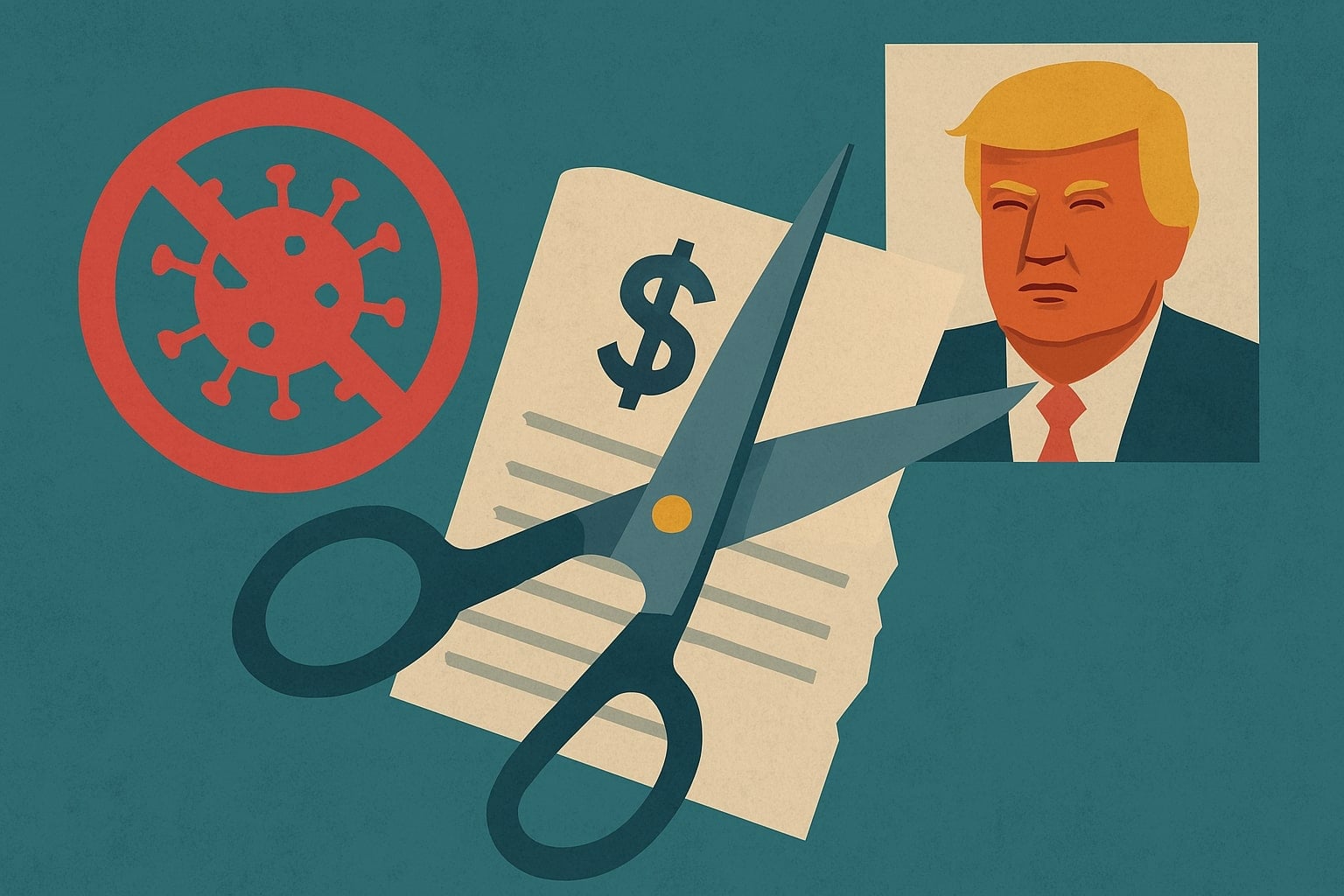
The Trump administration’s cuts to federal public health funding have had direct, measurable consequences for STD prevention across the United States. At a time when syphilis cases have more than doubled and congenital syphilis is at its highest level in decades, the gutting of CDC programmes, dismantling of community health outreach, and reduction of federal grants to state and local health departments have removed the infrastructure that previously detected and contained STD transmission chains.
CDC STD prevention programmes have faced significant funding reductions and workforce cuts under the Trump administration
Congenital syphilis — entirely preventable with routine screening — rose over 750% between 2012 and 2022
Community health outreach programmes in high-burden areas have been defunded or reduced
Contact tracing — the tool that breaks STD transmission chains — depends on the public health workforce being cut
Individual testing and treatment decisions remain the most direct personal response to systemic failures
What Has Been Cut and Why It Matters
The CDC’s Division of STD Prevention has historically been the backbone of the US government’s response to rising STD rates. It funds state and local health department STD programmes, conducts surveillance to identify where outbreaks are occurring, trains the public health workforce in contact tracing and partner notification, and supports community-based testing and treatment services in high-burden communities. Cuts to this division — whether through direct budget reductions, DOGE-driven workforce eliminations, or the defunding of partner grants — do not reduce STD transmission. They reduce the capacity to detect, respond to, and interrupt it.
Beyond the CDC, federal funding for Title X family planning services — which fund Planned Parenthood and other community health providers that offer a significant proportion of the low-cost STD testing in the US — has been a repeated target of reduction or restriction. State health department grants that support local STI programmes depend substantially on federal pass-through funding that has been made less certain by the current administration’s approach to grants management.
The Congenital Syphilis Crisis
Congenital syphilis is the clearest indicator of public health failure in STD prevention. A baby is born with syphilis only when a pregnant woman with syphilis does not receive adequate prenatal care, is not screened, or is screened but not treated in time. Every case is preventable. The more than 750% increase in congenital syphilis cases between 2012 and 2022 reflects a failure of prenatal care access, public health outreach to pregnant women in underserved communities, and the contact tracing systems that should identify and treat syphilis in pregnant women before delivery.
The communities most affected — rural areas, communities of colour, areas with high rates of housing instability and substance use — are precisely those most dependent on federal and state public health support. Cutting the programmes that serve these communities shifts cost onto emergency healthcare, neonatal intensive care, and lifelong disability support for affected children.
Contact Tracing: The Tool That Stops Chains
Contact tracing — identifying and notifying the sexual partners of someone who tests positive for an STD so they can be tested and treated — is one of the most effective tools in STD control. It is labour-intensive and requires a trained public health workforce. Every contact tracer employed by a health department represents a person who interrupts transmission chains that would otherwise continue for months or years. Public health workforce reductions directly reduce the capacity to do this work, with predictable consequences for transmission rates.
What This Means for Individuals
Systemic public health investment is what controls population-level STD transmission. When that investment is withdrawn, rates rise regardless of individual choices. That said, individual actions retain importance precisely because the systemic safety net is weaker. Regular testing catches infections that a less-resourced contact tracing system may not find. Treatment and partner notification that individuals initiate themselves replaces some of what the public health system is no longer doing.
Tips in the Context of Reduced Public Health Support
Get tested regularly — with less publicly-funded outreach, the onus falls more heavily on individuals to maintain their own testing schedules.
Know where free and low-cost testing remains available — Planned Parenthood, community health centres, and local health departments continue to operate despite funding pressures.
Notify partners yourself — if contact tracing capacity in your area is reduced, partner notification initiated directly by you is more reliable than waiting for the health department.
Ensure prenatal syphilis screening — if you are pregnant or planning pregnancy, confirm explicitly that syphilis screening is included in your prenatal panel.
Support public health funding advocacy — the National Coalition of STD Directors and SIECUS track and advocate on these issues.
Frequently Asked Questions
Have CDC STD programmes actually been cut?
Yes. The Trump administration has implemented significant reductions to CDC programmes through a combination of budget proposals, workforce reductions via DOGE, and changes to federal grant management. The specific scale and distribution of cuts has evolved throughout 2025 and continues to be contested. Organisations including the National Coalition of STD Directors have documented the impact on state and local programmes.
Will these cuts actually increase STD rates?
The relationship between public health funding and STD rates is well-documented: reduced investment in surveillance, contact tracing, and community testing services reliably leads to higher rates of undetected and untreated infection, and subsequently to higher transmission rates. The scale of the effect depends on the magnitude and duration of the cuts and whether state and local governments can compensate.
What can states do to compensate for federal cuts?
States can allocate their own funds to STD prevention programmes, maintain their public health workforce, and continue community health outreach. Some states with strong public health infrastructure have committed to maintaining services. Others — particularly those most dependent on federal pass-through funding — face more serious service reductions.
How do these cuts affect HIV specifically?
HIV programmes have also been affected, including through uncertainty around PEPFAR funding and changes to CDC HIV prevention programme grants. HIV-related STDs like syphilis, which increase HIV acquisition risk, are directly worsened by cuts to syphilis prevention programmes.
Is this a partisan issue?
The documented consequences — rising STD rates, reduced public health capacity, the congenital syphilis crisis — are public health facts, not partisan positions. The policy decisions driving them are made by elected officials accountable to voters. Reporting on these consequences accurately is describing what has happened and what the evidence says will follow.
Get Tested Regardless of System Failures
Whatever the state of public health infrastructure, the most direct thing you can do for your own sexual health is to get tested regularly. Fast, confidential testing is available at sexual health clinics, community health centres, and online.
Related reading: STI Epidemic 2025 · Syphilis: Making a Comeback · Why Regular Screening Matters · STD Testing Cost
Don’t Know What Could Be Causing Your Symptoms?
Get the complete STD test panel and take control of your health!


Dr. Emily Carter is a highly experienced sexologist with a passion for fostering healthy relationships and promoting sexual education. She actively supports the LGBTQ+ community through consultations, workshops, and awareness campaigns. Privately, she conducts research on how sexual education influences social acceptance.