Symptoms and Diagnosis
I Think I Have an STD: What to Do Next
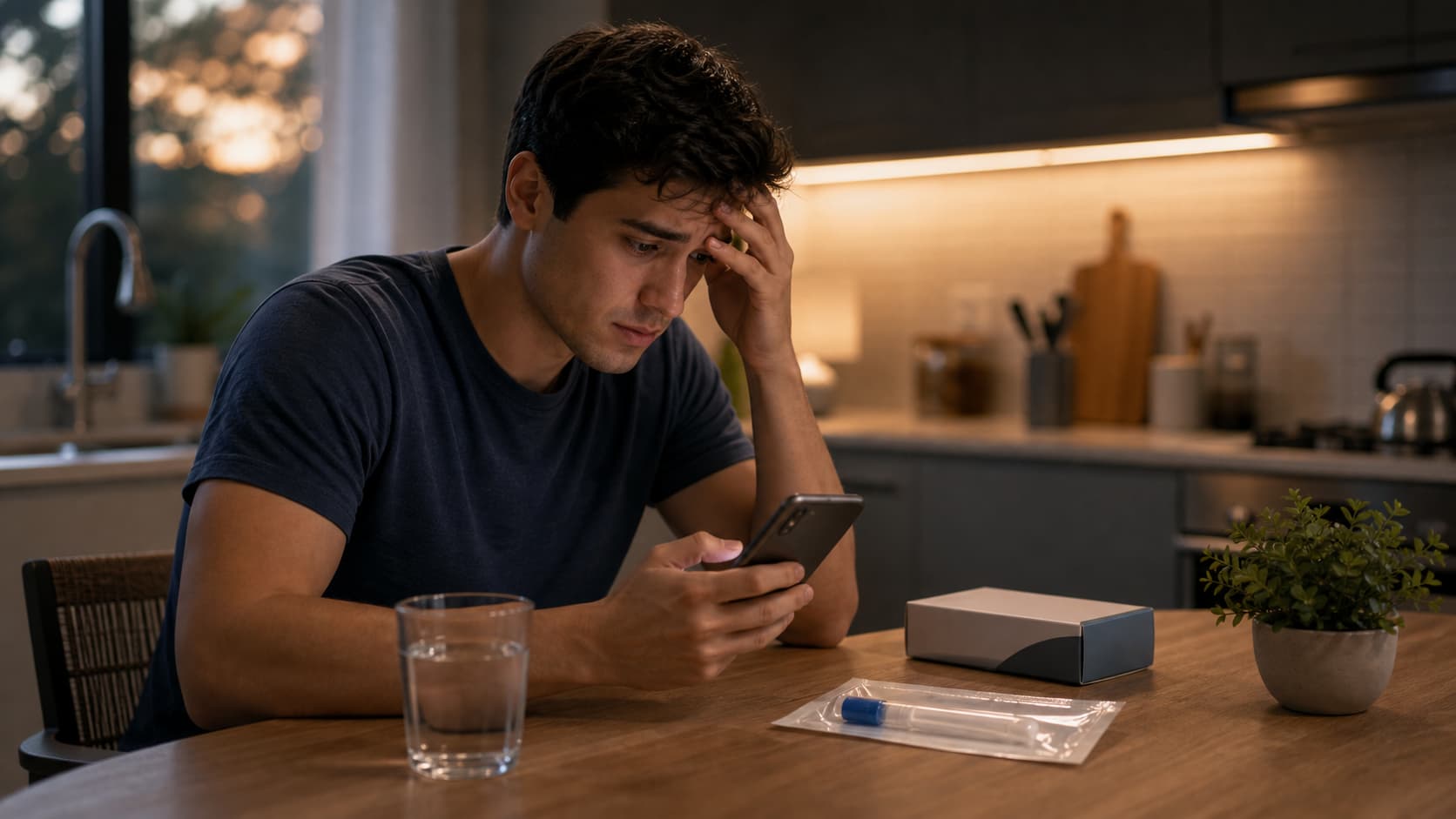
Thinking you might have an STD is stressful — but the path forward is straightforward: assess your symptoms and exposure, test at the right time, and treat if positive. The most important thing to do if you think you have an STD is get tested rather than self-diagnosing — because the most common STDs (chlamydia, gonorrhea) often produce no symptoms at all, because many STD symptoms overlap with non-STD conditions (UTI, yeast infection, contact irritation), and because testing and treatment are fast and effective.
Step 1: Assess Your Situation
Two questions establish what to do next. First: do you have symptoms? Second: did you have a potential exposure? Symptoms that suggest testing: unusual genital discharge (any color, amount, or odor outside your normal); pain or burning when urinating; sores, bumps, or ulcers on the genitals, buttocks, inner thighs, or mouth; unusual rash, particularly on the palms or soles; pelvic or lower abdominal pain in women; testicular pain or swelling in men; unexplained sore throat after oral sex. Potential exposures that warrant testing regardless of symptoms: unprotected vaginal, anal, or oral sex with a new or unknown-status partner; sex with a partner who has been diagnosed with an STD; condom failure during sex.
Step 2: Recognize What Might Not Be an STD
Many symptoms attributed to STDs have more common non-STD explanations. Burning with urination: the most common cause in women is a urinary tract infection (UTI) caused by E. coli, not an STD. Abnormal vaginal discharge: bacterial vaginosis (BV) and yeast infections are far more common than gonorrhea or chlamydia as causes of discharge changes. Genital irritation or itching: contact dermatitis from new soap, condoms (latex allergy), lubricant, or laundry detergent is common. Bumps near the genitals: most are ingrown hairs, sebaceous cysts, or molluscum contagiosum rather than herpes or syphilis. Testing is the only way to distinguish between these possibilities and an STD with certainty.
Step 3: Time Your Test Correctly
If you test too early, you'll get a false negative that provides false reassurance. Minimum window periods: chlamydia and gonorrhea: 14 days after exposure for a reliable result. Syphilis: 21 to 45 days for RPR to become reactive (can take up to 90 days). HIV: 18 to 45 days for 4th generation Ag/Ab test. Herpes IgG: 6 to 16 weeks. Exception: if you have an active sore or blister that could be herpes, a PCR swab now is accurate immediately — don't wait.
Step 4: Get Tested at the Right Place and Right Sites
Choose based on your priorities: fastest results (1 to 2 days): private direct-access lab (Health Test Express, STDcheck, Labcorp); lowest cost: public health clinic or FQHC; most comprehensive: specialist sexual health clinic that offers multi-site swabs. Tell your provider exactly what sexual activities you've had in the past 3 months. If you've had anal or oral sex, request rectal and/or throat swabs in addition to the standard urine and blood tests — those sites are missed by routine panels.
Step 5: While Waiting for Results
Avoid sexual contact until results are back and you know your status. Don't take antibiotics "just in case" without a confirmed diagnosis — this contributes to antibiotic resistance and may make subsequent testing less accurate. If you had a very high-risk HIV exposure (unprotected receptive anal sex with someone of unknown status) within the last 72 hours: contact a clinic or emergency department immediately about PEP (post-exposure prophylaxis).
For fast private STD testing with results in 1 to 2 days, Health Test Express offers NAAT panels without a GP referral.
Frequently Asked Questions
Can I test for STDs at home?
Yes. At-home test kits (urine self-collection sent to a lab) are accurate for chlamydia and gonorrhea at urogenital sites. They can't test for rectal or pharyngeal infections. Blood spot collection kits are available for HIV, syphilis, herpes, and hepatitis. Results typically return in 2 to 5 days.
Should I go to urgent care or an STD clinic?
An STD clinic or sexual health clinic is preferred — they're equipped to order multi-site testing, treat on-site if positive, and handle partner notification. Urgent care can order basic STD tests but may not offer rectal or throat swabs and may not have on-site gonorrhea treatment capability. Emergency room: only for severe symptoms (severe pelvic pain suggesting PID or ectopic pregnancy, high fever, inability to urinate).
What if I can't afford STD testing?
Free or sliding-scale testing is available at county health department clinics (gettested.cdc.gov), Planned Parenthood, and FQHCs (findahealthcenter.hrsa.gov). HIV testing is often free through community organizations.
Related: Positive STD test — what to do · STD testing near me · False negative STD test · Get tested today
This article is for informational purposes only and does not constitute medical advice.
Don’t Know What Could Be Causing Your Symptoms?
Get the complete STD test panel and take control of your health!


Dr. Michael Thompson is an expert in sexually transmitted diseases with extensive clinical and research experience. He leads campaigns advocating for early diagnosis and prevention of diseases like HIV and gonorrhea. He collaborates with local organizations to educate both youth and adults about sexual health.