Prevention and Education
How Does Syphilis Spread?
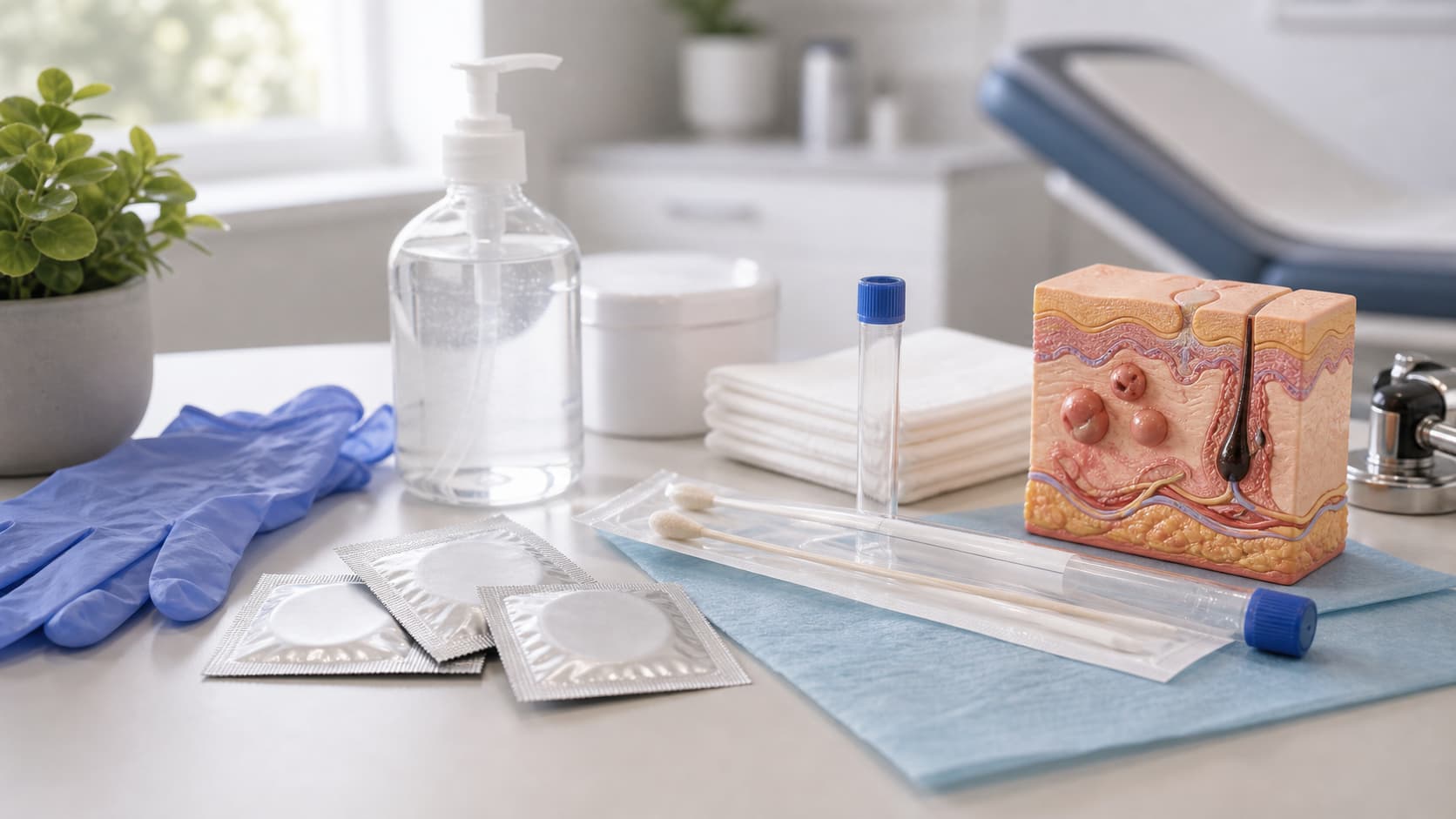
Syphilis spreads through direct contact with a syphilitic sore or lesion — not through casual contact, surfaces, or saliva alone. The primary route is sexual contact with an active primary or secondary stage lesion; congenital transmission through the placenta affects 40 to 100% of fetuses depending on the mother's stage; and per-act transmission from an active primary chancre is approximately 30%, making syphilis one of the most efficiently sexually transmitted bacterial infections.
The Transmission Mechanism
Treponema pallidum — the spirochete causing syphilis — is an extremely fragile organism outside the human body. It cannot survive desiccation (drying), cannot survive on surfaces for more than a minute or two, and is inactivated rapidly by oxygen exposure. This fragility means syphilis transmission requires direct contact between infectious tissue and a mucosal surface or abraded skin. There is no surface or indirect transmission route.
Stage-Dependent Infectiousness
Syphilis infectiousness varies dramatically by stage, which is clinically important for understanding transmission and contact tracing windows.
Primary syphilis: maximum infectiousness. The primary chancre — a painless, firm, indurated ulcer at the site of infection — contains high concentrations of T. pallidum and is directly infectious on contact. Per-act transmission probability from an active primary chancre is approximately 30% in studies, making this the highest-risk stage. Chancres can appear on the genitals, anus, lips, mouth, or anywhere contact occurred.
Secondary syphilis: high infectiousness via multiple routes. The secondary stage (4 to 10 weeks after primary sore) produces systemic dissemination with: the characteristic maculopapular rash (often on palms and soles) — the rash itself contains treponemes and is infectious on direct contact; mucous patches — flat, painless grey-white lesions on lips, tongue, palate, and throat that are highly infectious and can transmit syphilis through kissing; condylomata lata — broad, flat warts in moist skin areas, also infectious.
Early latent syphilis (within 1 year of infection, no symptoms): reduced but present infectiousness. Sexual transmission can still occur. Vertical (mother-to-fetus) transmission remains significant.
Late latent and tertiary syphilis: very low sexual infectiousness. Vertical transmission rare. Not considered significantly sexually transmissible at this stage.
Kissing and Syphilis
Kissing can transmit secondary syphilis when mucous patches are present in the mouth. This is an often-overlooked transmission route that becomes epidemiologically relevant when partner notification focuses only on sexual contacts. Standard lookback periods for secondary syphilis contact tracing extend 6 months — mucous patches can persist for weeks during the secondary stage, during which all kissing contacts are potentially exposed.
Congenital Syphilis: Placental Transmission
Treponema pallidum can cross the placental barrier from approximately 9 to 10 weeks of gestation onwards, meaning all stages of pregnancy carry transmission risk. The probability of vertical transmission varies by maternal stage: primary or secondary syphilis: 70 to 100% transmission to the fetus; early latent: approximately 40%; late latent: less than 10%. The outcomes of untreated congenital syphilis include miscarriage, stillbirth, neonatal death, and severe neonatal syphilis. Prenatal screening and penicillin treatment before 36 weeks prevents congenital syphilis with near-complete efficacy.
Syphilis as an HIV Cofactor
Syphilitic ulcerations at mucosal sites disrupt the epithelial barrier and recruit immune cells, creating optimal conditions for HIV acquisition and transmission. Studies show syphilis infection increases HIV acquisition risk approximately 2 to 5 fold. The same ulcerated tissue dramatically increases HIV shedding in people with HIV, increasing transmission risk to partners. Co-testing for syphilis and HIV is standard at every sexual health visit precisely because of this biological interaction.
What Doesn't Transmit Syphilis
Toilet seats, swimming pools, shared towels, doorknobs, or any surface contact. T. pallidum dies within minutes outside the body. Sharing food or drinks. Hugging or non-contact-with-lesion skin contact. These are not theoretical risks — they are biological impossibilities given the organism's extreme environmental fragility.
For syphilis testing including RPR and confirmatory treponemal testing, Health Test Express offers panels with results in 1 to 2 days.
Frequently Asked Questions
How easily does syphilis spread?
From an active primary chancre, per-act transmission probability is approximately 30% — significantly higher than HIV (0.1% per act) and comparable to gonorrhea. A single sexual contact with someone with an active syphilitic sore carries substantial transmission risk.
Can you get syphilis from kissing?
Yes, when secondary syphilis mucous patches are present in the mouth. Mucous patches are highly infectious, often painless, and may not be visible during kissing. This is a documented transmission route that standard sexual health messaging often omits.
Is syphilis contagious during the latent stage?
Early latent syphilis (within 1 year) carries reduced but real sexual and vertical transmission risk. Late latent syphilis (beyond 1 year) is not considered significantly sexually transmissible, though vertical transmission to the fetus remains possible.
Related: Syphilis symptoms · Syphilis treatment · Syphilis in pregnancy · Get tested today
This article is for informational purposes only and does not constitute medical advice.
Should I Get Tested for STDs?
A quick risk check based on CDC guidelines. Answer 7 questions — no signup, fully anonymous.
Question 1 of 7
When was your last STD test?
This quiz is based on general CDC screening guidelines and is for educational purposes only. It is not a medical assessment. Only a healthcare provider can recommend specific testing.
Don’t Know What Could Be Causing Your Symptoms?
Get the complete STD test panel and take control of your health!


Dr. Michael Thompson is an expert in sexually transmitted diseases with extensive clinical and research experience. He leads campaigns advocating for early diagnosis and prevention of diseases like HIV and gonorrhea. He collaborates with local organizations to educate both youth and adults about sexual health.