Symptoms and Diagnosis
Gonorrhea in the Mouth: Symptoms, Transmission, and Testing
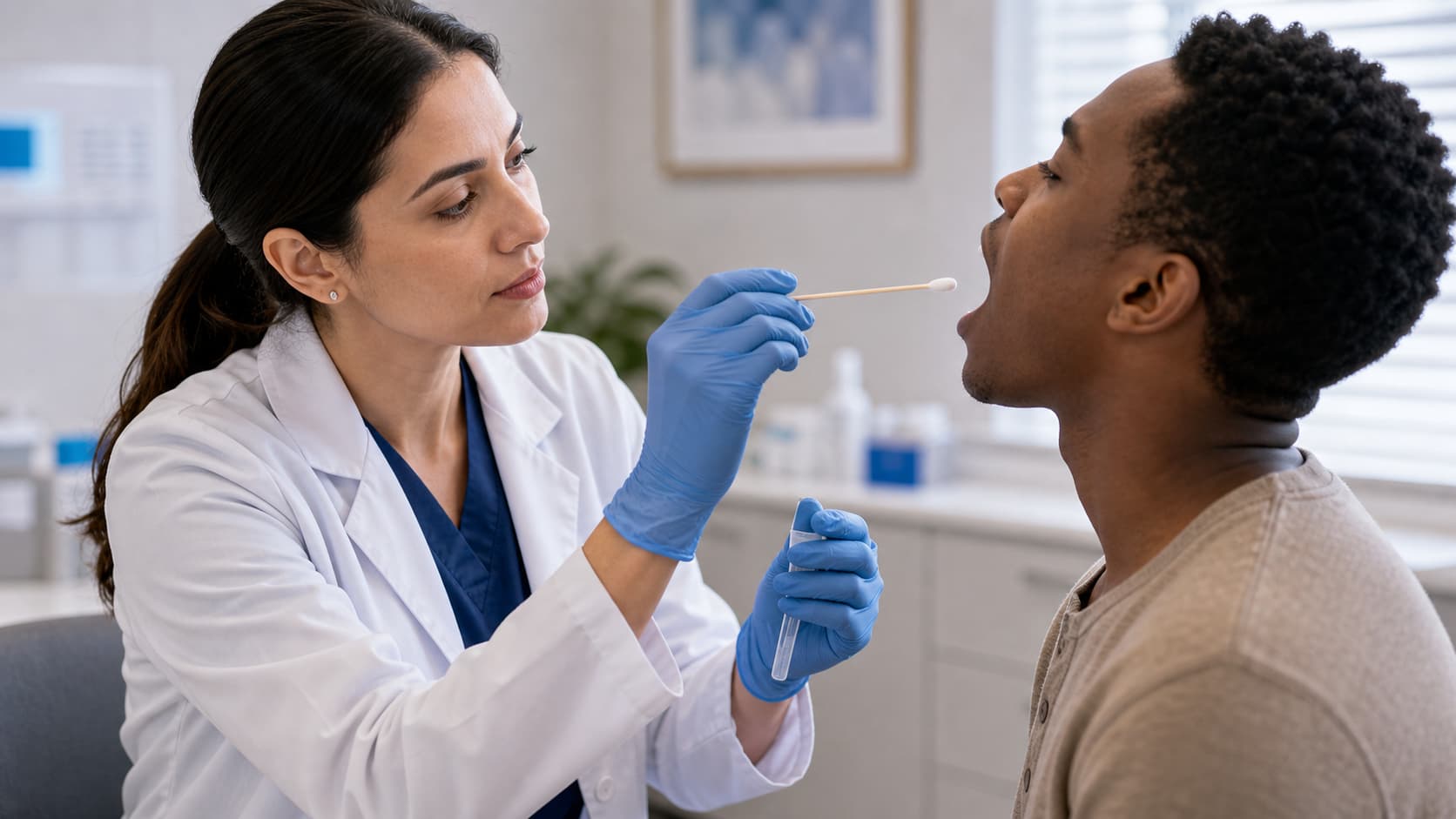
Gonorrhea in the mouth — pharyngeal gonorrhea — is one of the most commonly missed STD diagnoses. Pharyngeal gonorrhea affects up to 10 to 30% of people who have unprotected oral sex with an infected partner, is almost always completely asymptomatic, and is entirely missed by standard urine or genital testing. A throat swab NAAT is the only way to detect it.
How Gonorrhea Gets in the Mouth
Pharyngeal gonorrhea is acquired by receiving oral sex from an infected partner (fellatio or cunnilingus). Neisseria gonorrhoeae infects the mucosal surface of the throat and establishes infection there, independently of any genital infection. A person can have throat gonorrhea without genital gonorrhea, or vice versa. Both sites require separate testing.
Symptoms — or More Accurately, Their Absence
Pharyngeal gonorrhea is asymptomatic in the vast majority of cases. When symptoms occur, they are typically mild: sore throat, swollen tonsils, or throat redness that is clinically indistinguishable from strep throat or a cold. There is no symptom that reliably distinguishes pharyngeal gonorrhea from a common upper respiratory infection. The absence of a sore throat does not mean the throat is uninfected.
The Testing Gap
Standard STD panels test urine for chlamydia and gonorrhea, plus blood tests for HIV, syphilis, and hepatitis. A urine test cannot detect pharyngeal infection. A throat swab NAAT is a completely separate specimen from a completely separate site. Providers who don't ask about oral sex don't order throat swabs, and pharyngeal gonorrhea goes undetected.
I add throat swabs to every patient's panel who reports having had oral sex. Without asking, I'd miss a substantial proportion of pharyngeal infections — which continue to be transmissible and serve as a reservoir for spreading gonorrhea to new partners.
Treatment
Pharyngeal gonorrhea is treated with the same regimen as genital gonorrhea: ceftriaxone 500mg intramuscular injection. However, pharyngeal gonorrhea is harder to eradicate than genital infection — the throat environment allows the bacteria to adapt, and older oral antibiotics that have been removed from treatment guidelines were even less effective at this site. A test of cure (repeat throat swab NAAT) 1 to 2 weeks after treatment is recommended for pharyngeal infection.
Frequently Asked Questions
How do I get tested for gonorrhea in my throat?
Ask your provider specifically for a throat swab NAAT. This is a swab inserted briefly to the back of the throat, separate from any urine or genital test. It cannot be detected any other way.
Can you have throat gonorrhea without genital gonorrhea?
Yes — each site can be infected independently. A negative urine gonorrhea test says nothing about your throat gonorrhea status.
How long can throat gonorrhea go undetected?
Indefinitely without testing. Pharyngeal gonorrhea can persist for months to over a year in some cases without causing noticeable symptoms, continuing to be transmissible throughout.
Related: STD with sore throat · Gonorrhea symptoms · Oral STDs guide · Get tested today
This article is for informational purposes only and does not constitute medical advice.
Don’t Know What Could Be Causing Your Symptoms?
Get the complete STD test panel and take control of your health!


Dr. Michael Thompson is an expert in sexually transmitted diseases with extensive clinical and research experience.