Symptoms and Diagnosis
Chlamydia Symptoms in Men: Signs to Watch For
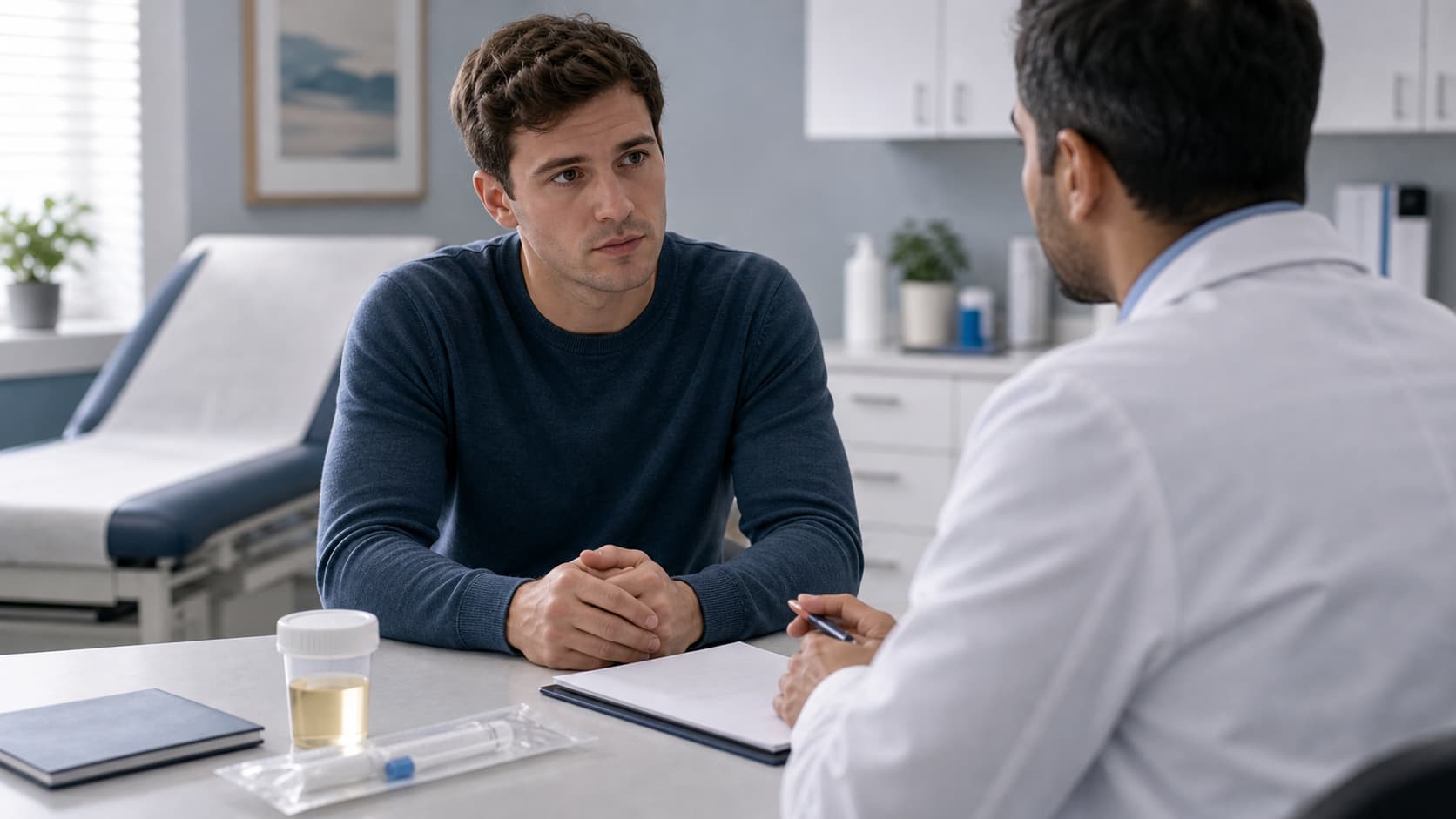
Chlamydia in men is frequently asymptomatic — but "no symptoms" doesn't mean no consequences. Approximately 50% of men with chlamydia have no symptoms at all; when symptoms do occur, they typically include urethral discharge and burning with urination; untreated chlamydia in men causes epididymitis and sperm DNA fragmentation that can impair fertility without any detectable discomfort.
How Common Are Symptoms in Men?
The asymmetry between men and women is significant. Up to 95% of women with chlamydia are asymptomatic. For men, approximately 50% are asymptomatic — still a majority without symptoms, but a lower proportion than women. This means that roughly half of infected men have some recognizable sign of infection, and half don't. The 50% who are symptomatic are the ones who come in for testing; the 50% who aren't are the ones who transmit it to partners without knowing.
Urethral Chlamydia: What Symptoms Look Like
When urethral chlamydia produces symptoms, they typically appear 7 to 21 days after exposure. The hallmark presentation: a clear or white mucoid urethral discharge — often described as watery or milky. This is clinically distinct from gonorrhea, which typically produces a profuse yellow-green purulent (pus-like) discharge. The difference matters: clear discharge more likely chlamydia, yellow-green more likely gonorrhea. Both require a NAAT test to confirm, because the distinction isn't always clear and co-infection is common.
Other urethral symptoms: burning or pain during urination (dysuria); urethral irritation or itching; mild swelling at the urethral opening. Symptoms are often mild enough to be dismissed as minor irritation, contributing to delayed diagnosis.
Epididymitis: The Most Important Complication
Untreated chlamydia in men can ascend from the urethra through the vas deferens to the epididymis — the coiled tube behind each testicle where sperm mature. This causes epididymitis: inflammation of the epididymis producing unilateral (one-sided) testicular pain, swelling, and warmth, typically developing gradually over days rather than suddenly. The affected side is usually tender to touch, and the epididymis may feel thickened or rope-like.
Chlamydia is the most common cause of epididymitis in sexually active men under 35. Gonorrhea is the second most common. Treatment requires doxycycline 100mg twice daily for 10 days (extended beyond the standard chlamydia treatment to adequately treat the deeper tissue infection). Untreated epididymitis can cause scarring of the epididymis that blocks sperm transport.
Sperm DNA Damage: The Silent Fertility Risk
Even without epididymitis, chlamydia in men causes damage that doesn't announce itself with symptoms. Chlamydia trachomatis directly infects sperm cells and the epithelial cells lining the reproductive tract. Active infection causes oxidative stress and inflammatory damage that increases sperm DNA fragmentation — a measurement of broken DNA strands within sperm. Elevated sperm DNA fragmentation reduces fertilization rates, embryo quality, and IVF success rates.
Men with unexplained infertility or recurrent IVF failure should be tested for chlamydia even when asymptomatic. This is a consistently under-recognized clinical connection. The infection may have been present for months or years without any genital symptoms while causing progressive sperm quality impairment.
Rectal and Pharyngeal Chlamydia in Men
Chlamydia in men is not limited to the urethra. Men who have anal sex can develop rectal chlamydia, which is almost always asymptomatic or causes only mild rectal discomfort. Men who have oral sex can develop pharyngeal chlamydia, also typically asymptomatic. Both are entirely missed by a standard urine NAAT test. A rectal swab and a throat swab are separate specimens that must be specifically ordered. If you've had anal or oral sex, tell your provider explicitly — these sites won't be tested otherwise.
Testing and Treatment
Urine NAAT for urethral chlamydia: collect first-void urine (first urine of the morning, or at least 1 hour without urinating before the test). Don't urinate immediately before collecting. Results in 1 to 3 business days. For rectal or pharyngeal infection: site-specific swabs required. Treatment: doxycycline 100mg twice daily for 7 days (first-line); azithromycin 1g single dose (alternative, lower efficacy). Retest at 3 months — reinfection from an untreated partner is common.
For fast private chlamydia testing with results in 1 to 2 days, Health Test Express offers NAAT panels without a GP referral.
Frequently Asked Questions
Can a man have chlamydia for years without knowing?
Yes. Approximately 50% of infected men are asymptomatic, and chlamydia can persist in the urethra for months to years without producing recognizable symptoms. During this time, it remains transmissible and can cause progressive epididymal damage and sperm DNA fragmentation.
What does chlamydia discharge look like in men?
Typically a clear, white, or slightly milky watery discharge from the urethra — often small in quantity and easily missed. This contrasts with gonorrhea, which tends to produce a larger amount of yellow-green purulent discharge. Testing is the only reliable way to distinguish them.
Does chlamydia affect male fertility?
Yes, even without epididymitis. Active chlamydia infection causes sperm DNA fragmentation and inflammatory damage to the reproductive epithelium. Men with unexplained infertility should be screened for chlamydia regardless of symptoms.
Related: Chlamydia window period · Chlamydia treatment · STDs and infertility · Get tested today
This article is for informational purposes only and does not constitute medical advice.
Don’t Know What Could Be Causing Your Symptoms?
Get the complete STD test panel and take control of your health!


Dr. Michael Thompson is an expert in sexually transmitted diseases with extensive clinical and research experience. He leads campaigns advocating for early diagnosis and prevention of diseases like HIV and gonorrhea. He collaborates with local organizations to educate both youth and adults about sexual health.